
Oceanfront Pool Construction vs. Inland: How Coastal Conditions Change the Build Process
Not all pool construction projects are built the same—and that’s especially true when they’re built by the ocean. For homeowners and developers considering a pool near the coast, understanding the difference between oceanfront pool construction and inland projects is essential. While the result may look similar above ground, the engineering, permitting, and long-term maintenance requirements are significantly different.
Here’s how coastal conditions change the build process—and why they require a custom pool design approach tailored to your environment.
1. Salt Exposure Affects Materials and Equipment
One of the biggest environmental factors near the coast is salt air. Even if the pool doesn’t use a saltwater pool installation, airborne salt from the ocean can accelerate corrosion of:
- Metal rebar and bonding grid
- Pool equipment (heaters, pumps, lights)
- Fixtures, handrails, and enclosures
That’s why oceanfront pool construction demands salt-resistant materials and thoughtful design—something experienced luxury pool builders prioritize in coastal builds.
2. Soil Stability and Drainage Are Bigger Challenges
Coastal soil conditions are often more complex than inland lots. Loose, sandy, or high-moisture content can impact the structure of any pool construction. To address this, contractors may use:
- Engineered backfill
- Retaining walls
- Advanced drainage planning
Custom pool design solutions for oceanfront homes ensure both structure and surrounding landscape remain stable and usable for years.
3. Setbacks and Regulations Are Stricter Near the Water
While inland pool construction may only involve local permits, oceanfront pool construction in Florida requires additional oversight from state agencies. This includes:
- Coastal Construction Control Line (CCCL) compliance
- Equipment elevation and floodplain considerations
- Environmental permitting
This layer of complexity makes it essential to choose a contractor with both residential and commercial pool construction experience—especially in regulated zones.
4. Wind and Storm Resilience Must Be Built In
In hurricane-prone areas, pool structures and surrounding features must handle wind loads and storm surge. This affects:
- Decking, fencing, and screen enclosures
- Equipment anchoring
- Electrical bonding
These upgrades may increase the pool construction cost initially but help avoid costly repairs and downtime after storms.
5. Visual and Layout Considerations Differ
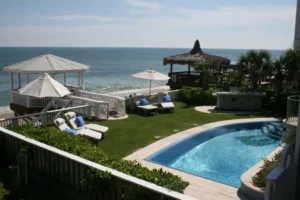
Oceanfront pools often emphasize views—whether that’s through infinity edges, frameless enclosures, or perimeter overflow designs. Unlike many inland pools, oceanfront layouts tend to blend into the surroundings and are part of a larger luxury pool builder vision.
6. Long-Term Maintenance Requires More Planning
Coastal environments require smarter choices up front—especially in custom pool design. Salt, sand, and wind can take a toll over time. To minimize long-term cost, an oceanfront pool should include:
- Durable finishes
- Proper drainage and filtration
- Coastal-grade fixtures and lighting
The extra attention during oceanfront pool construction ensures the investment holds up long term.
Coastal Pools Require Coastal Expertise
From pool construction cost to engineering and finish choices, building by the coast is a different experience entirely. Homeowners investing in oceanfront pool construction benefit most when working with a luxury pool builder who understands the technical and regulatory landscape.
If you’re comparing inland vs. coastal projects, the best decision is one built on experience—and a pool designed to last.